

Article: Why memory foam makes a difference in baby protection (and why padding matters)

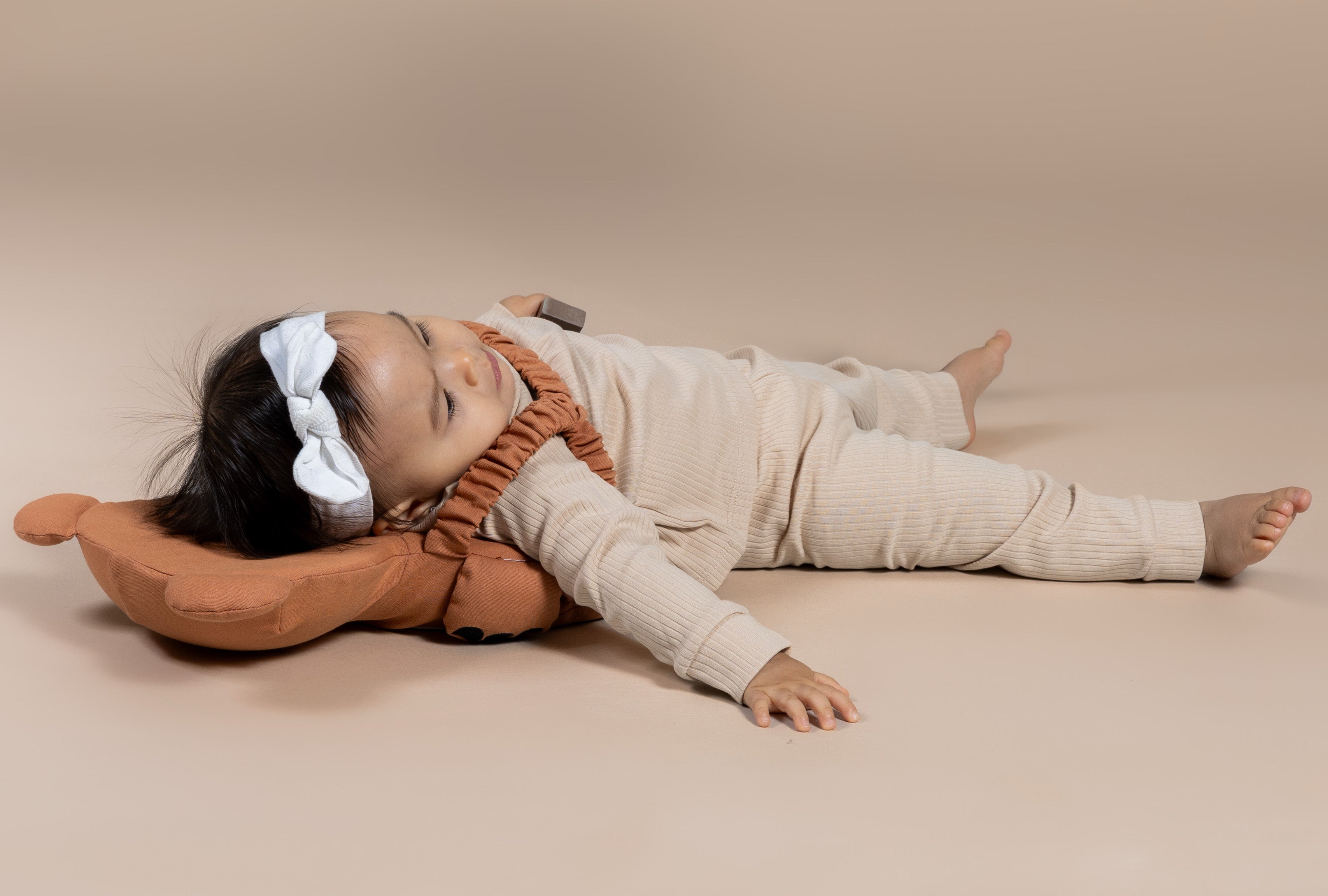
Why memory foam makes a difference in baby protection (and why padding matters)
Your baby's first steps are special.
But they also come with something many parents underestimate: falling.
Falling is part of development. It's an essential part of learning to sit, stand, and walk. But how a fall is cushioned makes a world of difference.
Not all protection is the same
Many products on the market seem similar at first glance. Soft, lightweight, and comfortable. But what's on the inside ultimately determines the protection.
There is a big difference between memory foam and synthetic filling like cotton, polyester, or foam flakes.
What does memory foam do differently?
Memory foam is designed to absorb pressure and impact.
It conforms to the head and distributes the force of a fall over a larger surface area.
This means:
-
Less direct impact on one point
-
Better support for head and neck
-
More controlled cushioning of a fall
The material "works with" your child's movement, instead of against it.
And synthetic filling?
Synthetic fillings often feel soft, but react differently to impact.
They:
-
Spring back quickly
-
Distribute the impact less effectively
-
Offer less targeted support
As a result, a fall is absorbed less effectively, especially with backward or sideways movements.
Protection in practice
When a child falls backward, the impact often lands on the back of the head, neck, and sometimes even the back.
Well-designed protection takes this into account:
-
Ear-to-ear protection (180°)
-
Support for neck and upper back
-
A shape that guides the impact, not just cushions it
Making a conscious choice
As a parent, you primarily want one thing: for your child to explore safely.
Not by hindering development, but by supporting it in the right way.
The difference is often not in what you see, but in what's inside.
BackBuddy is developed with specially shaped memory foam that helps to absorb not only backward but also sideways falls — precisely in the phase when your child starts exploring the world.